
Acupuncture’s Pain Relief Decoded
This summary outlines the findings from the National Geographic article published in May 2026, which explores how modern science is finally substantiating the ancient practice of acupuncture.
From Mystery to Measurable Science
For decades, acupuncture – a core pillar of Traditional Chinese Medicine (TCM) – was often dismissed by Western researchers as a placebo. However, the article highlights that recent breakthroughs in imaging and clinical trials are shifting this perspective. Scientists have discovered that acupuncture triggers a measurable, body-wide biological response that can, in some cases, relieve acute pain more effectively and quickly than intravenous morphine.
The Biological Mechanism: ‘Mechanotransduction’
The core of acupuncture’s effectiveness lies in a process called mechanotransduction. When a needle is inserted and slightly manipulated, it creates a mechanical “tug” on the surrounding connective tissue. This physical stimulus sets off a biochemical chain reaction:
- Chemical Release: Skin mast cells, acting as a “first line of defence”, release compounds such as histamine, serotonin, and adenosine.
- Neural Signalling: These chemicals stimulate nearby nerve endings, which then transmit messages to the brain’s pain-processing and emotional-regulation centres.
- Long-term Repair: Unlike placebo treatments, “true” acupuncture creates a tiny micro-injury that excites the central nervous system, triggering the body’s natural long-term repair mechanisms.
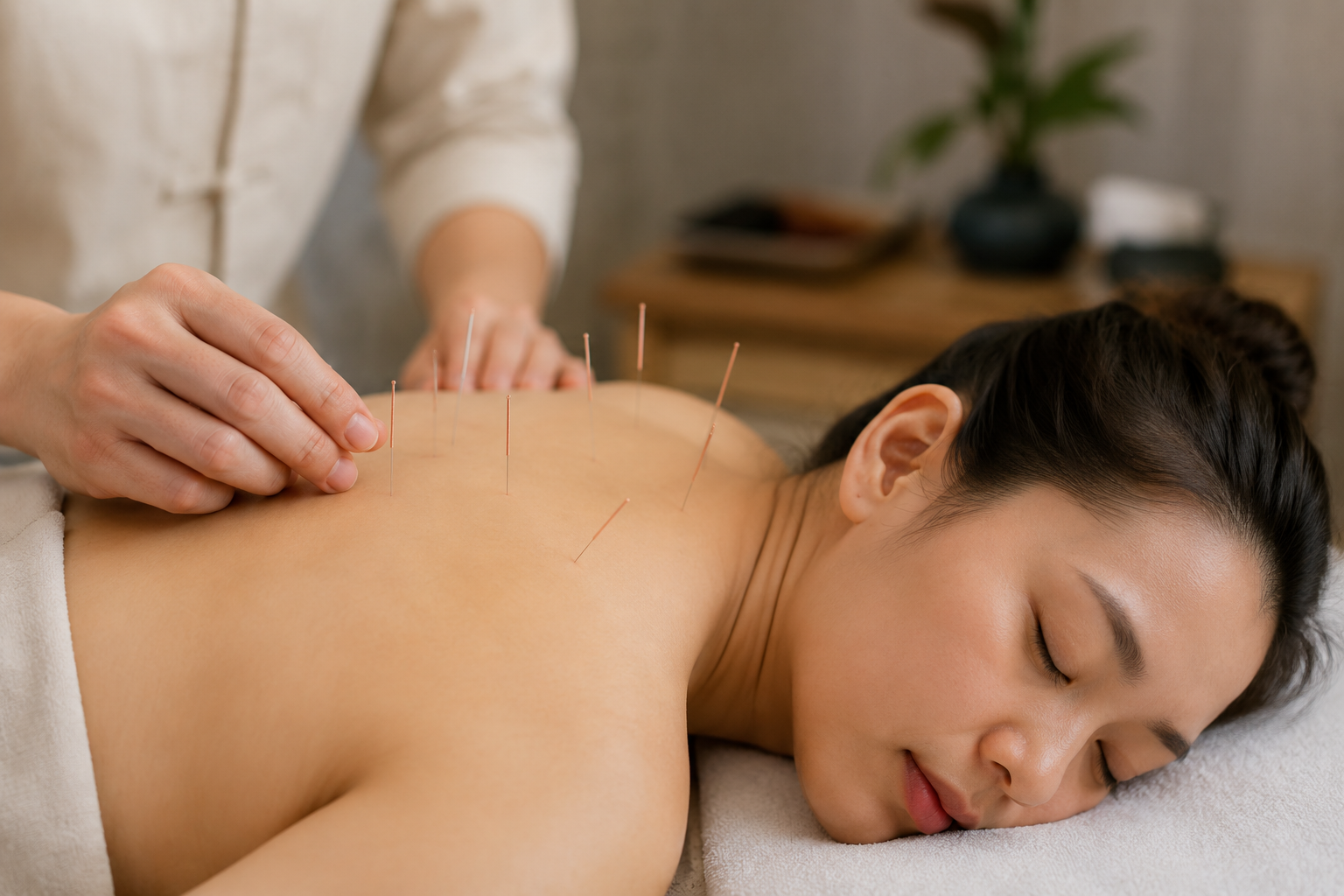
Mapping Ancient Meridians to Modern Anatomy
Researchers have found a striking correlation between traditional TCM “meridians” and the body’s physical structures. Studies show an 80% overlap between classical meridian pathways and connective tissue networks.
- Neural Ports: Points used in acupuncture often have a nerve fibre density 1.4 times higher than non-acupoints, essentially acting as “high-access ports” to the nervous system.
- Imaging Proof: High-field fMRI scans and soft X-ray imaging have allowed scientists to watch immune cells migrate toward needles and observe real-time changes in brain activity when specific points are stimulated.
The Breakthrough Double-Blind Study
One of the most significant hurdles for acupuncture research was the difficulty of conducting a “double-blind” trial where neither the patient nor the doctor knew if a real needle was being used.
- The Takakura Needle: Using a specialised placebo needle that conceals the depth of penetration, Professor Judith Schlaeger (University of Illinois Chicago) conducted a landmark study on chronic pain.
- The Result: While both real and “sham” acupuncture provided initial relief (thanks to the placebo effect and the “ritual of care”), the relief from true acupuncture lasted significantly longer—up to 12 weeks, compared to just four weeks for the placebo. This demonstrated a clear boundary between fleeting expectation and sustained physiological intervention.
A Global Alternative to Opioids
The article concludes by looking at the broader implications for global healthcare. With the ongoing opioid crisis, acupuncture is being positioned as a low-cost, non-addictive alternative for pain management.
- WHO Integration: The World Health Organization is currently propelling a “Global Traditional Medicine Strategy” (2025–2034) to integrate evidence-based practices like acupuncture into modern healthcare systems.
- Mainstream Adoption: In countries like Germany, public insurance already covers acupuncture for specific chronic conditions, signalling a shift toward a more integrative approach to medicine that values both ancient wisdom and rigorous scientific validation.
